How does a storm actually damage your roof?
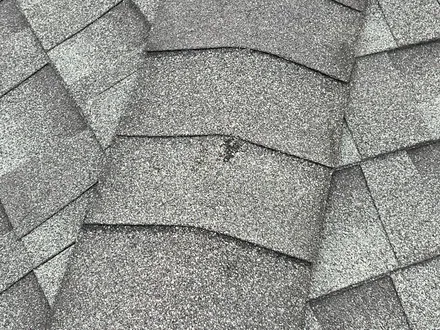
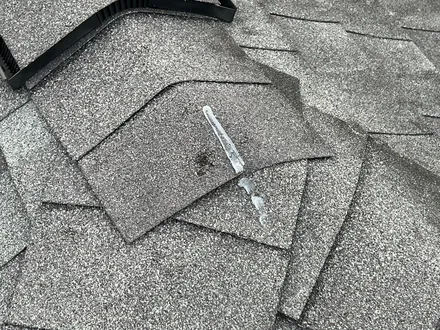
Storm damage happens fast, and most of it is invisible from the ground. When a Gulf storm rolls through Katy and Greater Houston, three forces go to work on your roof at once: straight-line wind, wind-driven rain, and flying debris. Wind lifts the edges and corners of shingles, breaks the sealant strips that hold each course down, and creases the shingle so it can no longer shed water. Once that seal is broken, every future gust levers the shingle up and drives rain underneath. You may not see a single missing shingle, but the roof has already started to fail.
The second wave of damage is water. Wind-driven rain does not fall straight down. It moves sideways at 40 to 70 miles per hour and gets forced under ridge caps, around pipe boots, and into any gap the wind just opened. That water soaks the felt or synthetic underlayment, wicks into the decking, and travels along rafters before it ever shows up as a stain on your ceiling. By the time you see a brown ring on the drywall, the leak has usually been active through the attic for days or weeks.
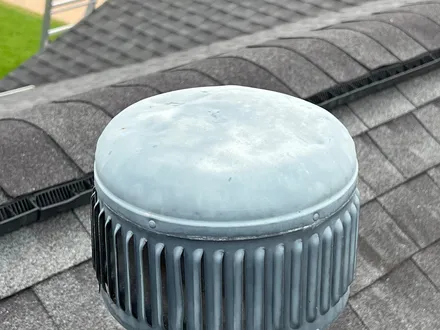
Debris is the third force, and it is common in our tree-heavy neighborhoods from Cinco Ranch to Cypress. Branches, fence sections, and even a neighbor's loose shingles become projectiles in a strong storm. They puncture shingles, dent metal flashing, and crack plastic vents. Each impact is a new entry point for water. This is why a storm-damaged roof needs a real inspection, not a glance from the driveway.
What does the storm damage repair process look like step by step?
The process starts with a full inspection, on the roof and in the attic. We walk the field of the roof and check the parts that fail first: the windward slopes, the ridge, the hips, the valleys, and every penetration. In the attic we look for daylight, damp decking, and fresh water tracks that a surface-only look would miss. We document everything with photos and notes before anyone talks about scope or cost. If the damage traces back to a specific storm event, that documentation becomes the backbone of an insurance claim.
Next comes stabilization. If the roof is actively leaking, we tarp and dry-in the vulnerable areas so the interior stops taking on water while the claim and the full repair get sorted out. This is the step storm chasers skip, and it is the step that saves your ceilings, insulation, and framing from secondary damage. A tight temporary dry-in buys you time to make good decisions instead of panic decisions.
The final phase is the actual repair or replacement. For a contained hit, that can mean replacing damaged shingles, resealing lifted courses, and swapping flashing or boots. For widespread wind or debris damage, a full replacement is often the honest answer, because patched-in shingles rarely seal or match a weathered roof. We put the scope in writing, complete the work, and hand you a final photo set showing the finished roof. For how pricing is built, see our Houston roof replacement cost guide and run the numbers yourself with our roof cost calculator.
What do insurance adjusters look for after a storm?
Adjusters look for storm-created damage that is consistent with a specific weather event and its date. That is the key phrase. They separate wind and impact damage from ordinary wear, age, and poor prior workmanship, because homeowner policies cover sudden storm damage but not gradual deterioration. When the damage tells a clear storm story, the claim moves. When it looks like age, the claim stalls. Good documentation is what makes the story clear.
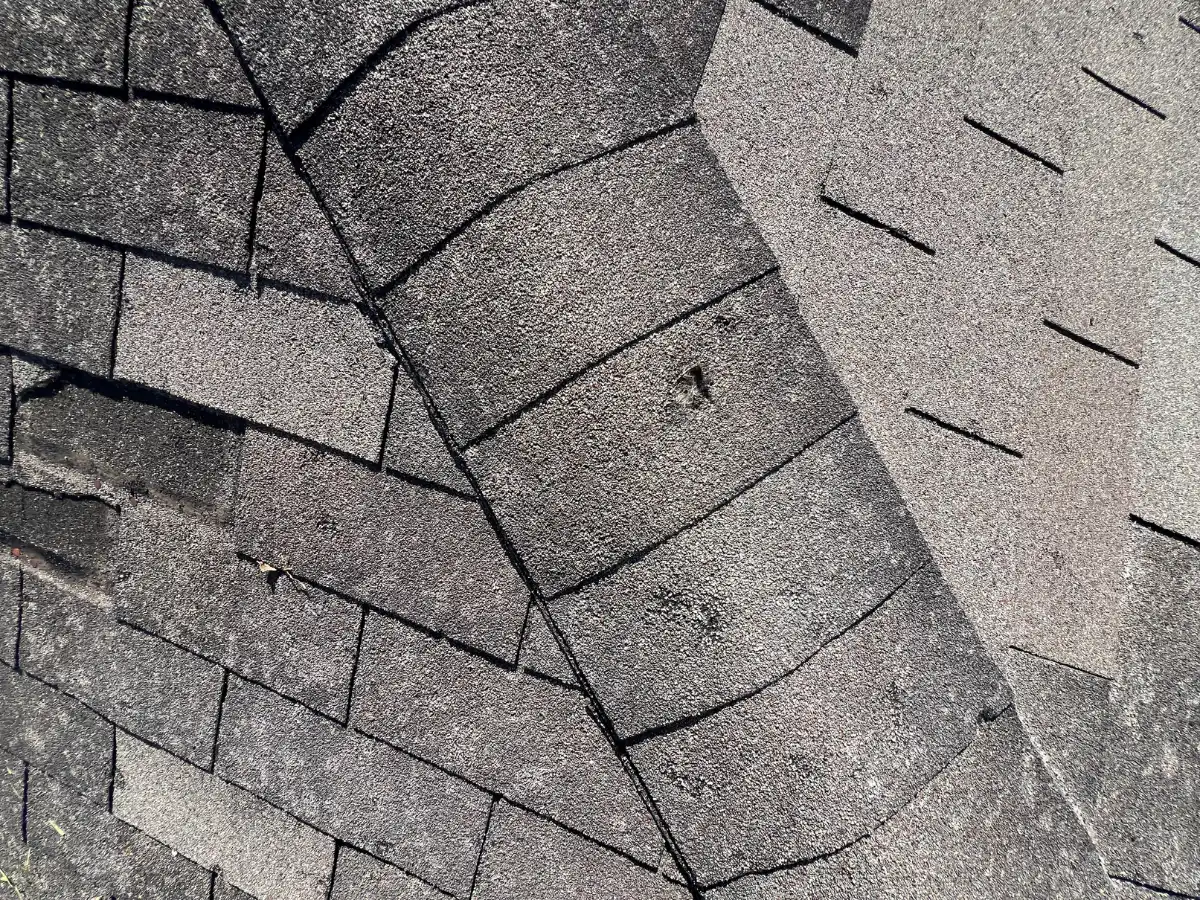
On a roof, an adjuster checks for lifted or creased shingles, broken sealant bonds, granule loss in impact spots, torn or displaced flashing, and damaged vents and boots. They also look at soft metals like gutters, downspouts, and fascia caps, because dents there help confirm wind and hail intensity across the property. They will compare your roof against the storm data for your address in Katy or your part of Houston to confirm the timeline lines up.
This is where having your own contractor at the inspection matters. When we meet the adjuster on the roof, we point out storm-created damage that is easy to miss from a ladder and make sure the full scope is captured, not just the obvious spots. We are not there to argue. We are there to make sure the roof is measured and documented fairly. That single meeting often decides whether a claim covers a real repair or falls short.
How long do you have to file a storm damage claim in Texas?
In Texas you generally have a limited window to file a property insurance claim after storm damage, and most policies also require prompt notice. The exact deadline lives in your policy, so read it or ask your carrier, but the practical rule is simple: do not wait. The longer you sit on visible damage, the easier it is for a carrier to argue the harm got worse from neglect rather than from the storm, which can reduce or deny what they pay.
There is a physical clock too. An unrepaired storm roof keeps leaking every time it rains, and Houston gets a lot of rain. Water that starts in the attic ends up in insulation, drywall, and eventually the framing. Catching it early keeps the claim focused on the roof instead of a growing list of interior repairs. Fast action protects both your home and your claim.
If a storm has just passed, the right first move is an inspection and, if needed, a temporary dry-in to stop active leaks. That protects the home and creates the dated documentation you will need. From there you can decide whether the damage rises to the level of a claim. We will give you a straight answer either way, including when the smart move is a simple out-of-pocket repair.
How do you avoid storm chasers after a Houston storm?
You avoid storm chasers by working with a local crew that will still be here next hurricane season. After every major Houston storm, out-of-town crews flood the area, knock on doors, and push homeowners to sign contracts on the spot. Many are gone within weeks. If your roof leaks a year later, there is no one to call, and the workmanship warranty they promised was never worth the paper.
The warning signs are consistent. Storm chasers pressure you to sign immediately, offer to waive or eat your deductible, ask you to sign over your insurance rights through an assignment of benefits, and quote a suspiciously round number before anyone has been on the roof. Waiving a deductible is not a favor, it is insurance fraud, and it puts you at risk, not just them. A real contractor documents the damage first and prices the actual scope.
Rlynt Roofing is locally owned right here in Katy, TX. We carry an A rating with the BBB, hold a 5.0 star rating on Google, a 5.0 on Angi, and we are insured. We back our work with a 10-year workmanship warranty plus the manufacturer material warranty, in writing. When you hire a local crew, the people who inspect your roof are the same people who stand behind it.
What roofing materials do you install for storm repairs?
For storm repairs and replacements we install shingle systems built to take a beating in Gulf Coast weather. We install Owens Corning architectural and Class 4 impact-rated shingle systems, with IKO options available. Class 4 is the top impact rating a shingle can earn, and on a coast that sees regular hail and wind-driven debris, it is worth serious consideration. Some carriers even offer a premium discount for impact-rated roofs, so it can pay you back over time.
Material choice is only half the equation. A storm-worthy roof depends just as much on what goes on under and around the shingles: a proper starter course sealed at the eaves and rakes, correct nailing patterns so shingles do not blow off, quality underlayment, and flashing detailed the right way at every wall, valley, and penetration. Wind almost always finds the weak detail first, so we build those details to hold. A great shingle over a sloppy install still fails.
We help you match the system to your home and your budget without upselling you into something you do not need. If you want to compare options and understand how material grade affects the total, our Houston roof replacement cost guide breaks it down, and the roof cost calculator lets you model different choices. The goal is a roof that survives the next storm, not just this one.
Our Process
- 01
Free inspection
We inspect the roof — drone plus boots-on-roof — and give you a full photo report. No obligation.
- 02
Documented assessment
You see exactly what we see: every hit, leak, and worn area, documented the way insurers expect.
- 03
Clear written scope
A written scope and price. If insurance is involved, we build the claim documentation and meet your adjuster on the roof.
- 04
The build
Our own crew does the work — tear-off, decking check, underlayment, and your chosen shingle system, installed to code.
- 05
In writing
A 10-year workmanship warranty plus the manufacturer material warranty. Final walkthrough and cleanup with a magnetic nail sweep.