When do you actually need emergency roof tarping?
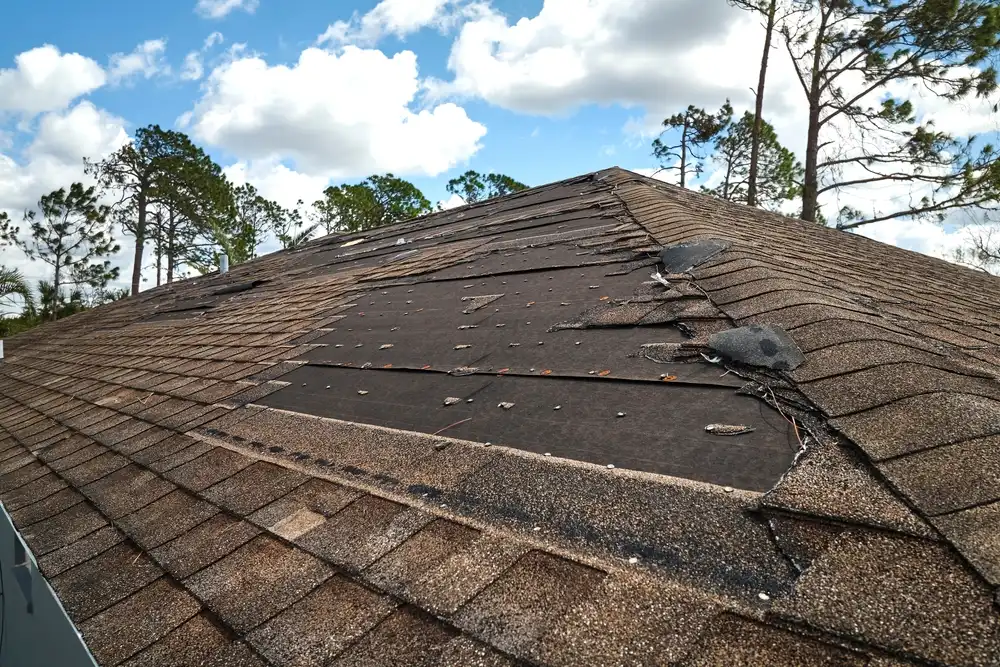
You need emergency roof tarping the moment your roof has an opening that is letting water in and you cannot get a permanent repair done fast enough. That usually happens after a storm. A tree limb punches through, wind peels a section of shingles or the entire roof covering off, or hail cracks the roof open, and now every hour of rain is pushing water into your attic, your ceilings, and your walls. A tarp is the stopgap that buys you time. It is not the fix, but it stops the damage from getting worse while the real repair or a claim gets sorted out.
In Houston, that need comes up more than most homeowners expect. Gulf storms roll through hard and fast, and hurricane season can leave whole neighborhoods with damaged roofs at the same time. When that happens, permanent repairs get scheduled out, and the rain does not wait for your appointment. A properly installed tarp keeps the water out during that gap. Every day a hole in your roof sits uncovered in this climate, the interior damage compounds.
The rule of thumb is simple. If you can see daylight through your roof, if water is coming through a ceiling, or if a storm has clearly opened the roof up, you need it covered now, not next week. Tarping is about stopping the bleeding. The sooner the opening is sealed, the less of your home the water gets to ruin.
Why does tarping fast matter so much in Houston's climate?
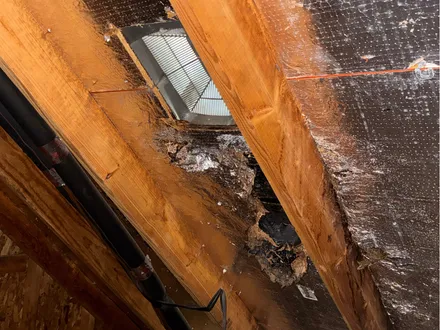
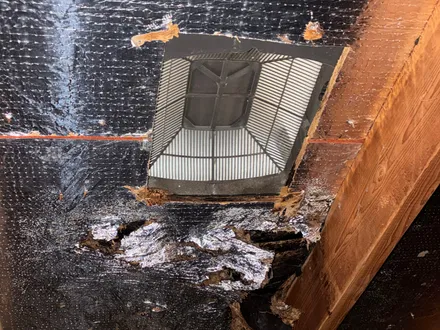
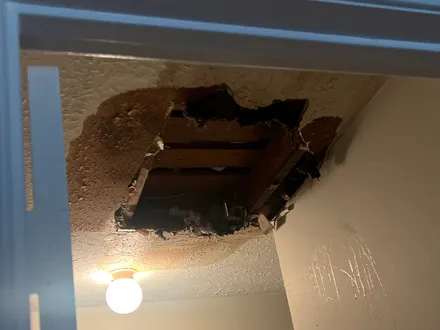
Tarping fast matters in Houston because water damage does not wait, and the humidity here makes everything worse. The moment your roof is open, rain is soaking your decking, your insulation, your drywall, and your framing. Wet insulation stops insulating. Soaked drywall sags and stains. But the bigger threat in this climate is what comes after the water: mold. In the warm, humid Gulf Coast air, mold can begin taking hold in a wet attic within a day or two, and once it is in the framing and insulation, remediation gets expensive and invasive fast.
There is also the matter of how much water we are talking about. A single Houston downpour can drop inches of rain in a short window, and all of it that hits your roof is now looking for the opening. A hole that seems small can funnel a shocking amount of water into your home during one storm. Getting a tarp over that opening before the next band of rain arrives can be the difference between drying out a small area and gutting several rooms.
Speed also protects your insurance position. Most policies expect you to take reasonable steps to prevent further damage after a loss, and a promptly installed tarp is exactly that. It shows you acted to limit the damage, and it keeps the rain from turning a clear storm claim into a murky mess of secondary water damage. Covering the roof quickly is both the practical move and the smart one for your claim.
How does the emergency tarping process work?
The tarping process starts with getting a crew to your home quickly to assess the damage and get the opening covered. When we arrive, we find the source of the intrusion, which is not always where the water is showing up inside, since water can travel along the decking before it drops through a ceiling. We clear away any debris, a fallen limb or loose roofing, that would keep a tarp from lying flat and sealing.
Then we install the tarp the right way, which is more involved than throwing a blue tarp over the roof and weighing it down with bricks. We use heavy-duty tarps sized to fully cover the opening with overlap onto sound roofing, and we secure them so wind cannot get underneath and peel them off in the next storm. Done properly, the edges are anchored and the tarp is tensioned so water runs off it rather than pooling on top. A tarp that flaps loose is a tarp that fails exactly when you need it, so we take the time to fasten it down to hold.
While we are up there, we document what we find with photos. That documentation matters, because a tarp is very often the first step in a storm-damage insurance claim, and the images of the original damage support that claim. We give you a clear picture of what happened and what the roof needs, so the tarp is not just a patch but the start of an actual plan to get your roof made whole.
How long can a tarp stay on the roof?
A properly installed tarp is a temporary measure, and the honest answer is that it should stay on only as long as it takes to get the permanent repair done, ideally weeks rather than months. A good tarp, well anchored, can hold up for a while and keep water out through storm after storm. But it is not a roof. Sun and heat degrade tarp material over time, the Texas UV is hard on it, and fasteners work loose with enough wind cycles. The longer it stays up, the more it needs to be checked.
We treat the tarp as the opening move in a larger plan, not the end of the story. Once the roof is covered and the immediate threat is handled, we plan the permanent repair or replacement with you, and if a storm caused the damage, we hand you the dated photos from under the tarp for your records. Our goal is to get you from tarp to finished roof as efficiently as the repair, the parts, and the claim allow, so the temporary cover does not have to be temporary for long.
If circumstances stretch the timeline out, a tarp can serve longer than you would like, but it should be inspected periodically to make sure it is still sealed and secure. What you do not want is to forget about a tarp and discover months later that it failed in a storm and the water has been getting in again. We would rather get you a real roof and take the tarp back down.
How does tarping connect to repairing your whole roof?
Tarping is the first step of restoring your roof, not a service that stands alone. Once the opening is covered and your home is protected from the next rain, the real work begins: figuring out the full extent of the damage and building it back the right way. The storm that opened your roof rarely damages just the one spot you can see. Wind and hail work across the whole roof, and what looks like a single hole often sits alongside lifted shingles, bruised areas, and compromised flashing that all need attention.
Because we handle both the emergency cover and the permanent restoration, nothing gets lost in the handoff. The same company that documented the damage under the tarp is the one that scopes the repair, and if it is a storm claim, you file it with the photos we took before the tarp went on, and we meet your adjuster on the roof to show them the full damage, not just the obvious hole. From the tarp to the finished roof, it is one continuous plan with one team accountable for the outcome.
That continuity is the point. A tarp from a company that then hands you off, or never follows up, leaves you managing the hard part alone. We would rather cover your roof today, document everything, and see the job through to a fully restored roof backed by our workmanship warranty in writing. The tarp buys the time; the restoration is what actually protects your home for the years ahead.
What does emergency tarping cost, and how fast can you respond?
The cost of emergency tarping depends on the size of the opening, how steep and complex the roof is, and how much material it takes to cover the damage securely. It is a small cost next to the interior damage it prevents, and when the damage is storm-related, tarping is very often part of the insurance claim along with the permanent repair. Rather than guess at a number, we assess your roof and give you a straight answer, and for the larger picture of repair or replacement cost, our Houston roof replacement cost guide and roof cost calculator lay out real ranges.
Speed is the whole point of an emergency service, so we move quickly to get damaged roofs covered across Katy and Greater Houston, especially in the busy aftermath of a storm. The faster we get a tarp on, the less water gets into your home, so we treat these calls with the urgency they deserve. When we arrive, we cover the opening, document the damage, and lay out the next steps toward a permanent fix.
From there, the tarp becomes step one of a real restoration backed the same way all our work is: a 10-year workmanship warranty plus the manufacturer material warranty, in writing, on the permanent repair. You get a fast cover to stop the damage, honest documentation, and a clear plan to get your roof whole again, all from one locally owned team that answers for the result.
Our Process
- 01
Free inspection
We inspect the roof — drone plus boots-on-roof — and give you a full photo report. No obligation.
- 02
Documented assessment
You see exactly what we see: every hit, leak, and worn area, documented the way insurers expect.
- 03
Clear written scope
A written scope and price. If insurance is involved, we build the claim documentation and meet your adjuster on the roof.
- 04
The build
Our own crew does the work — tear-off, decking check, underlayment, and your chosen shingle system, installed to code.
- 05
In writing
A 10-year workmanship warranty plus the manufacturer material warranty. Final walkthrough and cleanup with a magnetic nail sweep.