When is a roof repair the right call instead of a replacement?
A repair is the right call when the damage is isolated on an otherwise sound roof. If a storm blew off a section of shingles, cracked a pipe boot, loosened flashing at a wall, or drove a branch through one slope, a targeted repair fixes the problem without the cost of a full replacement. The test is simple: is the rest of the roof still in good shape, with plenty of service life left, and is the damage confined to a spot we can rebuild cleanly? If yes, you repair.
The line moves when the failures start showing up everywhere. Shingles curling and shedding granules across whole slopes, nail pops in every direction, and leaks that reappear in new places after each rain are signs the roof is wearing out as a system, not just at one spot. Patching a roof like that buys a few months while the rest keeps failing, and you end up paying for the repair and the replacement both. In Greater Houston, a roof past 20 years old with widespread wear is usually in that territory.
We do not upsell a replacement when a repair will genuinely hold. Our free drone and boots-on-roof inspection shows you the actual condition, and if the roof has good years left and the damage is contained, the report says repair. When you get an honest read, you can spend your money where it actually solves the problem.
What roof problems do you repair in Katy and Houston?
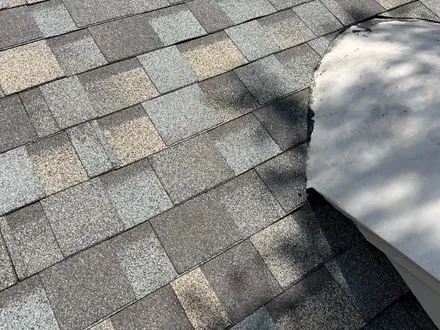
We repair the full range of common failures that Greater Houston roofs run into. The most frequent is storm damage: wind-lifted or missing shingles, hail-bruised or cracked shingles, and blown-off ridge caps after the straight-line winds and hail that roll through this area every spring and hurricane season. We also fix the slow leaks that never make the news, the kind that stain a ceiling months after the storm that started them.
Beyond storm damage, the usual suspects are failed pipe boots, worn or pulled-away flashing, damaged valleys, and popped or backed-out nails. Pipe boots are a top leak source in Houston because the rubber gasket dries and splits under years of Texas sun, and water runs straight down the vent pipe into the attic. Flashing failures at walls, chimneys, and skylights are close behind, since that is where two surfaces meet and water is always looking for a seam. We track the leak to its real source rather than smearing sealant over the stain.
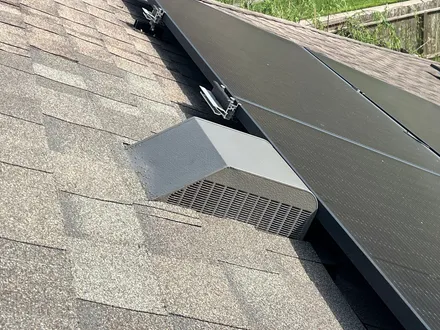
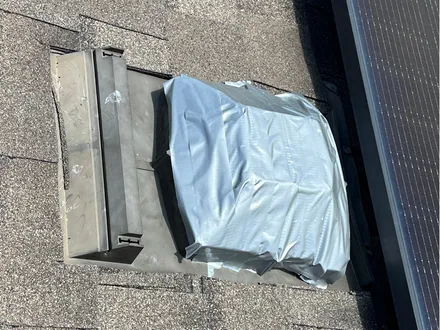
We also handle the smaller repairs that keep a good roof healthy: resealing exposed fasteners, replacing cracked or slipped shingles, clearing and repairing valleys, and fixing ventilation components. Catching these early is the difference between a quick repair and a rotted deck later. Small problems on a roof do not stay small when Houston rain keeps testing them.
How do you find the real source of a roof leak?
We find the source by reading the roof, not the ceiling stain. Water rarely enters where it drips inside; it travels along the deck, the underlayment, and the framing before it finally shows up on your ceiling, sometimes several feet from the actual breach. Chasing the stain instead of the entry point is how leaks come back after a so-called repair. We start at the interior evidence, then work up and out on the roof to where the water is really getting in.
The inspection is drone and boots-on-roof together. The drone captures every slope, valley, and penetration in high resolution, including the steep sections that are unsafe to walk, so nothing gets missed. Then we get on the roof where it is safe and check the suspects by hand: pipe boots, flashing seams, nail heads, valley metal, and the shingles directly upslope of the interior stain. A camera can show a cracked boot, but only a hands-on check can feel a soft deck or lift a shingle to see whether it is still sealed.
You get the findings in writing with the photos, so the repair scope is based on evidence, not a guess. When we tell you where the leak is coming from, we can show you the exact spot that is letting water in. That is the only way to fix a leak once instead of twice.
What does a Rlynt roof repair include?
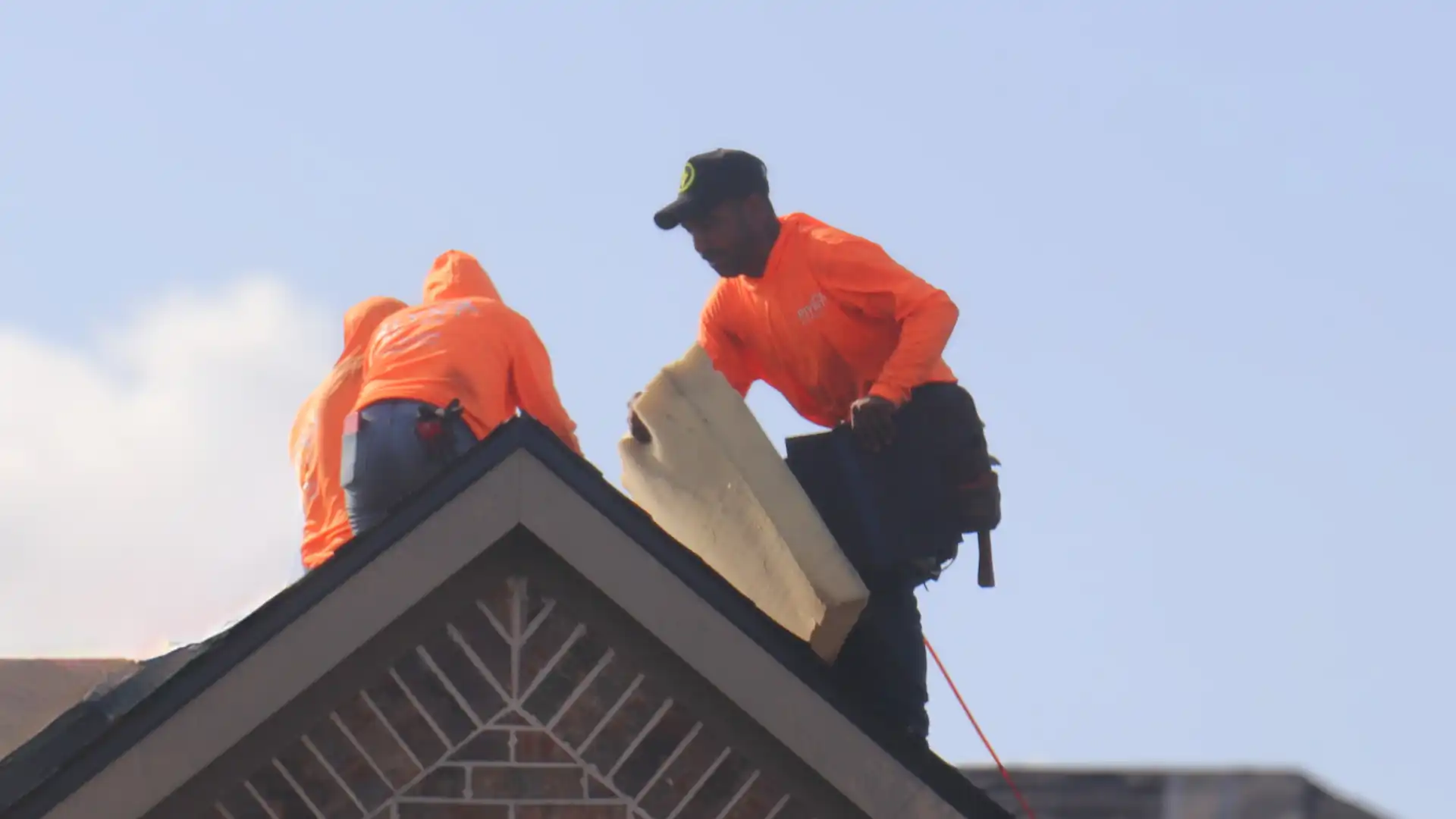
A Rlynt repair rebuilds the failed section the right way, using the same system-level approach as a full replacement scaled to the area involved. If shingles are gone, we do not just tuck a new shingle under the old ones and nail it; we open the area, check the underlayment and decking beneath, replace anything that is soft or rotted, and rebuild the layers in order so the repair sheds water the way the surrounding roof does. A repair that skips the underlayment or the deck check is a repair that leaks again.
For the common failures the fixes are specific. Cracked pipe boots get a new boot, not a bead of caulk. Pulled or corroded flashing gets replaced and properly integrated with the shingles and the wall, not surface-sealed over. Damaged valleys get the metal and the shingle courses rebuilt so water runs off cleanly. We match the repair to the surrounding shingle as closely as the existing roof allows, and we tell you honestly when weathering means a color match will not be perfect.
When the shingle work is done, we clean up after ourselves, including a magnetic nail sweep of the area below the repair so no fasteners are left in the yard or driveway. A repair is still roofing, and the standard for cleanup is the same as any other job we do.
How does the free drone inspection work and how fast can you come out?
Every repair starts with a free drone inspection, because a leak that has already found its way inside is not a problem to sit on. We fly a drone over the whole roof to capture the field condition and pinpoint damage, then put boots on the roof where it is safe to walk and check the leak suspects by hand. The two methods together give a complete read on what failed and what it will take to fix it.
Speed matters with an active leak. Every rain that passes over an open breach drives more water into the deck, the insulation, and the ceiling, turning a simple shingle-and-boot repair into a rotted-deck-and-drywall job. Getting on the roof quickly, tarping if needed, and scoping the real repair is how you keep a small problem small. Because we are locally owned in Katy, a crew can usually be on your roof across the Katy and Houston area.
You get the findings in writing with photos, and if the honest answer is that the roof needs replacement rather than a repair, the report shows you why. We would rather tell you the truth up front than sell you a patch that will not hold.
What does a roof repair cost and does it affect my warranty or insurance?
Repair cost depends on what failed, how much area is involved, and how much water damage the leak has already caused to the underlayment and decking. Replacing a single pipe boot is a small job; rebuilding a valley or opening a slope to replace rotted deck is a larger one. Because the scope drives the price, we base the number on the actual inspection rather than a guess. For a sense of what roofing work costs in this market, our Houston roof replacement cost guide and roof cost calculator give useful context even when you are only looking at a repair.
If the damage came from a storm, the repair may run through your homeowners insurance rather than out of pocket. We photograph the wind and hail damage by drone and hand you a dated report and a written repair scope to submit with your claim. A repair scope tied to a storm claim should reflect the real damage, not a lowball patch that leaves you exposed the next time it rains.
A repair we perform comes with our workmanship standard behind it, and a full Rlynt replacement carries a 10-year workmanship warranty plus the manufacturer material warranty, in writing. We are locally owned in Katy, Texas, serving Greater Houston since 2024, rated 5.0 stars on Google and 5.0 on Angi, with a BBB A rating, and insured. When your roofer is rooted in the community, standing behind the work is simply how it goes.
Our Process
- 01
Free inspection
We inspect the roof — drone plus boots-on-roof — and give you a full photo report. No obligation.
- 02
Documented assessment
You see exactly what we see: every hit, leak, and worn area, documented the way insurers expect.
- 03
Clear written scope
A written scope and price. If insurance is involved, we build the claim documentation and meet your adjuster on the roof.
- 04
The build
Our own crew does the work — tear-off, decking check, underlayment, and your chosen shingle system, installed to code.
- 05
In writing
A 10-year workmanship warranty plus the manufacturer material warranty. Final walkthrough and cleanup with a magnetic nail sweep.