Why do gutters matter so much in the Houston climate?
Gutters matter in Houston because water is the one thing that never gives your roof or your foundation a break. The Gulf Coast gets more than four feet of rain in an average year, and it does not arrive gently. It comes in short, violent bursts that can dump two or three inches of rain in an hour. A roof without gutters, or with gutters that are undersized or clogged, has no way to control that volume. The water sheets off the eaves, hammers the ground at the base of the walls, and finds its way into places it was never meant to go.
The damage is rarely dramatic at first. It shows up slowly as rotted fascia boards, soaked soffits, peeling paint, and dark staining down the siding. Underground, it is worse. Katy and much of Greater Houston sit on expansive clay soil that swells when it is wet and shrinks when it is dry. When rainwater pours off the roof and pools against the foundation, that soil moves, and a moving foundation cracks. Properly sized gutters carry that water away before it ever gets the chance to do that.
Good gutters are not a cosmetic add-on. They are the drainage system for your entire roof, and in a climate that throws this much water at a house, they do quiet, constant work that protects everything below the roofline. When we replace or install a roof, we treat the gutters as part of the same water-management system, not an afterthought bolted on later.
What are seamless gutters, and are they better?
Seamless gutters are gutters formed from a single continuous run of metal, cut to the exact length of your roofline on site, so the only joints are at the corners and the downspout outlets. That is the difference that matters. Sectional gutters, the kind sold in pre-cut lengths at big-box stores, are joined every ten feet with seams, and every one of those seams is a place where sealant eventually fails and water starts to weep. In a climate that fills gutters as often as Houston does, those seams become leaks sooner rather than later.
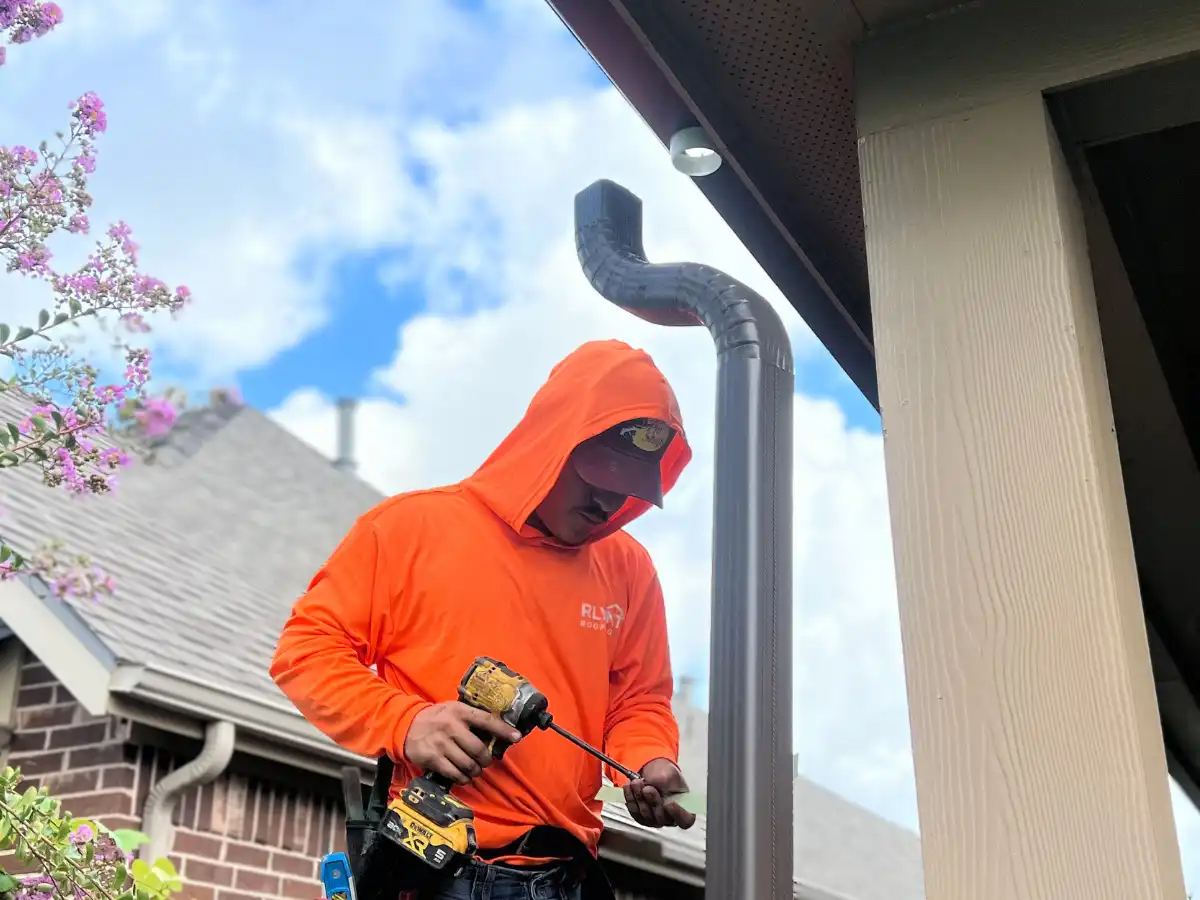
We fabricate seamless aluminum gutters on site from a coil-fed machine, which means the run matches your house instead of your house matching the run. Fewer joints means fewer failure points, a cleaner look along the eave, and far less maintenance over the life of the system. Aluminum will not rust, holds its finish for years in the Gulf humidity, and is light enough to hang without stressing the fascia.
Seamless is the standard we install because it is the standard that lasts here. The upfront difference over sectional gutters is modest, and it pays for itself in the leaks and repairs you never have to deal with. When you are already dealing with this much rain, the last thing you want is a drainage system that leaks at every joint.
How do you size gutters and downspouts for Houston rainfall?
You size gutters for Houston by planning for the heaviest rain, not the average. Most homes are fine with standard five-inch K-style gutters, but on a house with a large or steep roof, long uninterrupted eaves, or a valley that dumps water into one spot, we step up to six-inch gutters. A six-inch gutter carries roughly forty percent more water than a five-inch, and that extra capacity is the difference between a gutter that keeps up in a downpour and one that overflows over the front edge exactly when you need it most.
Downspouts do the other half of the job. A gutter can only move water as fast as its downspouts can drain it, so we place them based on the roof area feeding each run rather than just putting one on each end. Larger three-by-four-inch downspouts move considerably more water than the older two-by-three size, and on high-volume roofs we use more of them and space them closer together. We also aim the discharge well away from the foundation, because dropping the water right at the wall defeats the entire purpose of catching it up top.
Every roof sheds water differently, so we look at pitch, roof area, valley locations, and where the water naturally wants to concentrate before we settle on a size and downspout layout. The goal is simple. When the sky opens up over Katy, the water goes where we planned for it to go, not over the edge and down your walls.
Do I need gutter guards in Houston?
Gutter guards make sense in Houston anywhere your gutters sit under trees, and much of Katy and Greater Houston does. Oaks, pines, and pecans drop leaves, needles, and seed pods year-round here, and all of it ends up in open gutters. Once debris builds up, the gutter clogs, water backs up behind it, and the whole system stops draining. Backed-up water spills over the edge, rots the fascia, and in a hard freeze it can sit and add weight that pulls the gutter off the house.
Guards are a cover or screen fitted over the gutter that lets water in while keeping most leaves and debris out. They do not make a gutter completely maintenance-free, but they dramatically cut how often you or someone else has to get on a ladder to clean them out, and they keep the system flowing during the storms that matter. On a two-story house or a home surrounded by mature trees, that reduction in ladder time is worth a great deal on its own.
Whether guards are worth it comes down to your tree cover and your roofline, and we will give you a straight answer rather than upselling a product you do not need. On a house with no overhanging trees, well-maintained open gutters may be all you require. On a shaded lot, guards often pay for themselves in avoided cleanings and avoided water damage.
How do gutters fit into the rest of your roof system?
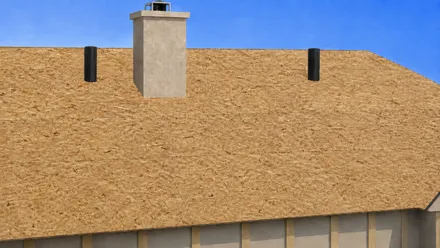
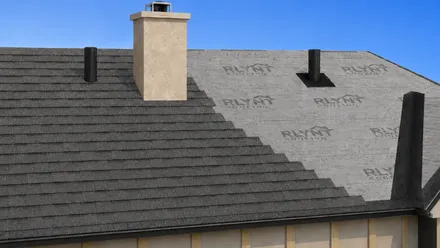
Gutters are the last stage of a roof's water-management system, and they only work as well as everything above them. Your shingles shed water into the gutters, the drip edge and flashing guide it in cleanly, and the gutters and downspouts carry it away from the house. If any part of that chain is off, water finds the gap. A missing drip edge, for example, lets water wick behind the gutter and rot the fascia even when the gutter itself is doing its job.
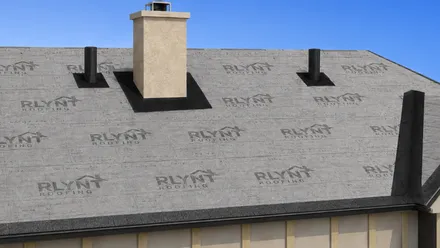
That is why we look at gutters as part of the whole roof rather than a separate trade. When we install or replace a roof, we make sure the drip edge, underlayment, and flashing all direct water into the gutter the way they should, and we check that the gutter pitch actually runs toward the downspouts. A gutter hung dead level looks fine and drains nothing. Small details like slope and outlet placement are what separate a gutter that lasts from one that leaks in a year.
Replacing gutters at the same time as a roof also just makes sense practically. The crew is already up there, the fascia is exposed, and any rot behind the old gutters is easy to catch and fix before the new system goes on. If your roof is due and your gutters are tired, doing both together saves you a second mobilization and gives you one clean, integrated water system backed by one warranty.
What do gutters cost, and how long does installation take?
Gutter cost depends on how much linear footage your home has, whether you go with five-inch or six-inch, the downspout count, and whether you add guards. We do not quote a flat number sight unseen because every roofline is different, and a fair price has to reflect your actual house. For real ranges and to see how gutters fit into a larger roofing project, look at our Houston roof replacement cost guide, or run the numbers yourself with our roof cost calculator, then we confirm with a free on-site measurement.
Timeline is one of the shorter jobs we do. A typical seamless gutter installation on a single home is usually completed in a single day, since we fabricate the runs on site and hang them the same visit. Larger homes, two-story runs, or projects that add guards may stretch into a second day. If gutters are part of a full roof replacement, they go on near the end of the project once the roof is finished.
Every gutter installation is backed the same way the rest of our work is: a 10-year workmanship warranty plus the manufacturer material warranty, in writing. That means if a seam we sealed or a hanger we set fails within that window, we come back and make it right. You get a straight scope, a straight price, and a system built to handle the rain this part of Texas actually gets.
Our Process
- 01
Free inspection
We inspect the roof — drone plus boots-on-roof — and give you a full photo report. No obligation.
- 02
Documented assessment
You see exactly what we see: every hit, leak, and worn area, documented the way insurers expect.
- 03
Clear written scope
A written scope and price. If insurance is involved, we build the claim documentation and meet your adjuster on the roof.
- 04
The build
Our own crew does the work — tear-off, decking check, underlayment, and your chosen shingle system, installed to code.
- 05
In writing
A 10-year workmanship warranty plus the manufacturer material warranty. Final walkthrough and cleanup with a magnetic nail sweep.