Local roofing in Houston Heights
The Heights is full of 1900s through 1920s bungalows and cottages across 77008, 77007, and 77009, which means steep original framing, aging decking, and roofs that have been layered over the decades. Older skip-sheathing and worn flashing around dormers and chimneys are common leak sources in Sunset Heights and Germantown. Gulf storms drive wind and hail through the near-north side, and the May 2024 derecho pushed gusts near 100 mph straight through this part of Houston, dropping large trees and limbs onto century-old roofs. Many homes also carry additions with low-slope sections that need different detailing than the main gable.
Neighborhoods we serve in Houston Heights
We’re on roofs across Houston Heights every week, including:
HOA & permitting in Houston Heights
Parts of the Heights fall under City of Houston historic district rules that can affect exterior work, including roofing visible from the street. We confirm whether a property sits inside a designated historic district and account for any Certificate of Appropriateness requirements before we begin.
Roofing a Century-Old Bungalow Is Not the Same Job
The homes that make the Heights the Heights were built between about 1900 and the 1920s, and their roofs reflect that age. Under the shingles you often find skip-sheathing, board decking with gaps that were meant to breathe, rather than the solid plywood or OSB a modern roof sits on. That changes how you fasten, how you detail valleys, and how you handle the steep original framing these bungalows carry.
Decades of reroofing add another wrinkle. Many Heights roofs have been layered over more than once, so what looks like a straightforward tear-off can hide multiple courses of old shingles, tired felt, and soft board underneath. We are on roofs in the Heights every week, and we plan for what these homes actually have, not what a newer subdivision roof would have.
The dormers, chimneys, and additions that give a Heights bungalow its character are also its most common leak points. Flashing around those details wears out, and on a century-old roof it has usually been patched more than once. Getting those transitions right is where a proper Heights roof job is won or lost.
Historic District Rules and the Certificate of Appropriateness
This is the question that trips up most Heights homeowners: does my reroof need city historic review? The Heights holds several City of Houston historic districts, and inside them, exterior changes visible from the public right-of-way can require a Certificate of Appropriateness through the city's preservation office. Roofing is part of that.
The good news is that an in-kind reroof that keeps the existing pitch, shape, and shingle material is typically exempt from Certificate of Appropriateness review. The trigger comes when you change the game, going from composition to metal, or altering the visible roof form. That is when a COA application comes into play. We confirm whether your specific address sits inside a designated district and account for any review before we begin.
None of this should scare you off. It just means the process has an extra step for some properties, and skipping it is not worth the risk on a historic home. We handle permitting and flag the historic-district status up front so your Heights roof stays compliant and there are no surprises.
Storm Damage on the Near-North Side
The Heights sits on Houston's near-north side, right in the path of the Gulf storms and spring squall lines that push wind and hail across the city. The May 2024 derecho was a hard reminder, driving gusts near 100 mph through this part of town and dropping large trees and limbs onto roofs that have stood for a century. A falling limb on a steep, aging bungalow roof does real damage fast.
Older Heights roofs also hide damage in ways newer roofs do not. Layered shingles can mask hail bruising and wind creasing, and heavy rain finds every tired valley on a hundred-year-old roof. When we inspect, we look under the surface conditions, not just the top course, so the true state of the roof is on the record.
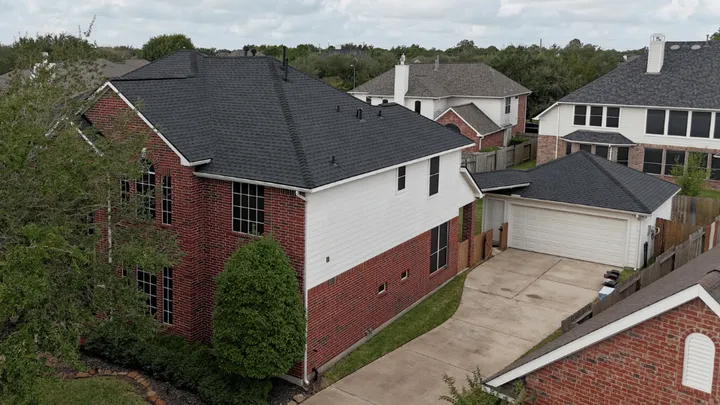
That thoroughness matters most on an insurance claim. On an older Heights home, an adjuster needs clear documentation of what the storm actually did versus what is simple age. We photograph from the air and on the deck so the claim reflects real damage.
What to Check Before You Call a Roofer in the Heights
Start with what you know about the house. How old is the roof, how many times has it been layered, and has anyone ever opened it up to look at the decking? On a Heights bungalow those answers shape everything, because board decking and skip-sheathing may need attention that a newer home never would.
Look for the signs a tired historic roof gives off: staining on ceilings under valleys and near the chimney, granules washing out at downspouts, and any daylight or moisture in the attic after heavy rain. Check the flashing around dormers and any lower-slope additions first, since those transitions are the classic Heights leak points.
Finally, find out whether your property sits inside a historic district before you plan any change to the roof's look. We check that for you, book a free drone inspection, and give you a written assessment so you can make the call with real information on a home worth protecting.