How does hail actually damage a roof?
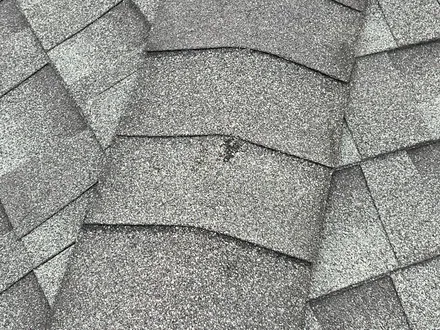
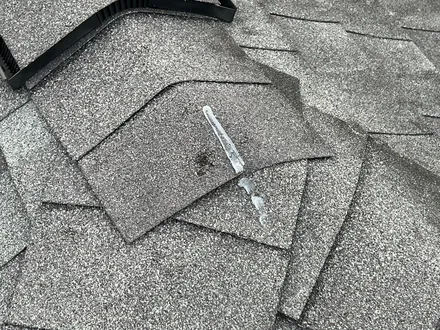
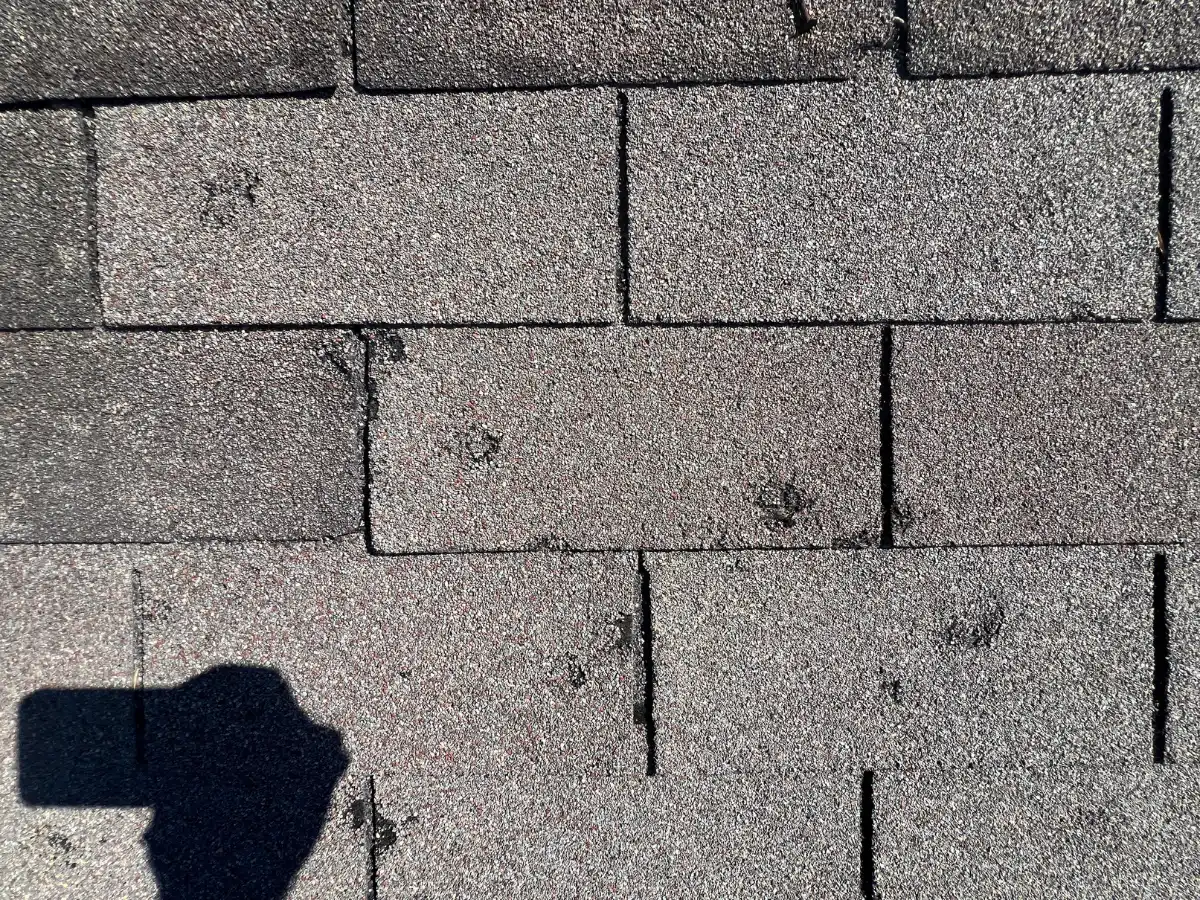
Hail damages a roof by bruising and fracturing the shingle at the point of impact, and the harm is usually deeper than it looks. When a hailstone hits an asphalt shingle, it knocks loose the protective granules and cracks the asphalt and fiberglass mat underneath. That spot, called a hit or a bruise, is now a soft bare patch. The granules were the shingle's sunscreen, so once they are gone, the exposed asphalt bakes in the Texas sun, dries out, and cracks. A single storm can quietly cut years off a roof's life.
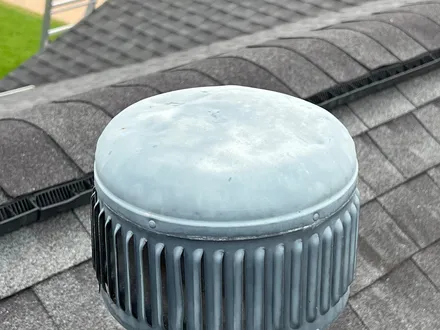
The classic sign of a fresh hail hit is a round, dark bruise where granules were knocked away, often with a soft, dented feel when you press it. These hits land in a random, scattered pattern across the roof, which is exactly how adjusters tell hail apart from foot traffic or manufacturing defects. On a Katy or Cypress roof, you often see the matching evidence on softer surfaces first: dents in gutters, dings on the metal drip edge, spatter marks on painted flashing, and bruised vent caps.
The reason hail damage is dangerous is that it rarely leaks right away. A bruised shingle can look almost normal from the ground and keep water out for months. Then the cracked spots open up, granule loss accelerates, and the roof starts failing across every slope at once. By then the storm that caused it may be a year or two in the past, which makes documentation and timing critical.
What does the hail damage inspection and repair process look like?
The process begins with a careful on-roof inspection that treats the roof like a grid. We check each slope for the random scatter pattern that says hail, and we mark and count hits within a test square so the density of damage is documented, not guessed. We photograph representative hits, the soft-metal evidence on gutters and flashing, and any spatter marks. That grid-and-square method is the same approach an insurance adjuster uses, so our findings and theirs speak the same language.
Hail damage is almost never a spot repair. Because the impacts scatter across the whole roof, patching a few shingles here and there does not solve the problem, and new shingles rarely match or seal to a hail-worn roof. When the hit density crosses the threshold, the correct answer is a full replacement of the affected slopes or the entire roof. We will tell you plainly which situation you are in after we count the hits, not before.
Once the scope is set, replacement follows the same disciplined steps as any quality reroof: tear off to a sound deck, replace damaged decking, install proper underlayment and flashing, and lay a new shingle system with correct nailing and sealed starter courses. We finish with a photo set of the completed roof. To understand how the numbers come together, read our Houston roof replacement cost guide and model your own scenario with our roof cost calculator.
Does insurance cover hail damage, and what do adjusters check?
Homeowners insurance in Texas typically covers hail damage, because it is sudden and storm-created rather than gradual wear. That is the good news. The catch is that the adjuster has to confirm the damage is real hail damage and that it matches a datable storm event for your address. If the roof shows genuine hail bruising in a random pattern and the storm history backs it up, the claim generally has a clear path.
Adjusters look for the same evidence we document: round bruises with granule loss and a soft mat underneath, hit density counted in a test square, and corroborating dents on gutters, downspouts, drip edge, and vents. They rule out look-alikes such as blistering, mechanical damage from foot traffic, and normal aging. They also weigh your roof's age, since a very old roof may be settled on an actual-cash-value basis rather than full replacement cost. Knowing which basis your policy uses matters for what you pay out of pocket.
This is why we recommend having your contractor present when the adjuster inspects. When we walk the roof together, we make sure every slope with hits gets counted and every piece of soft-metal evidence is on the record. We are not there to inflate anything. We are there to make sure a legitimate hail claim is documented fully so it is not shortchanged by a rushed look.
How long do you have to file a hail claim in Texas?
In Texas you have a limited window to file a hail damage claim, and most policies also require you to give prompt notice once you know of the damage. The exact deadline is written in your policy, so confirm it with your carrier. Because hail damage often hides for a long time before it leaks, the practical challenge is discovery: many homeowners do not realize they were hit until a later leak or a routine inspection reveals older bruising.
That delay creates a real risk. The longer the gap between the storm and the claim, the harder it can be to tie the damage to a specific covered event, and the easier it is for a carrier to argue the roof simply aged. This is why we suggest an inspection after any notable hail event in your area, even if nothing is leaking. Catching hail damage early keeps the claim clean and gives you options while you still have time.
If you think a past storm may have hit your roof, an inspection costs you nothing but a little time and settles the question. We document what we find with dated photos. If there is a claimable hail event, you will have the evidence ready. If there is not, you will have peace of mind and a clear picture of your roof's real condition.
Should you install impact-rated shingles in the Houston area?
If you live in the hail-prone belt around Katy and Greater Houston, impact-rated shingles are worth serious consideration. We install Owens Corning architectural and Class 4 impact-rated shingle systems, with IKO options available. Class 4 is the highest impact rating a shingle can earn, tested to resist cracking from a standardized impact. On a roof that will likely see hail again, that added toughness translates directly into fewer bruises and a longer service life.
There is often a financial upside too. Many insurance carriers offer a premium discount for homes with Class 4 impact-rated roofs, because those roofs file fewer hail claims. Over the life of the roof, that discount can offset part of the upgrade cost, on top of the money you save by not replacing a hail-battered roof as often. It is one of the few upgrades that can pay you back while it protects you.
Impact rating is not a magic shield, and a Class 4 roof can still take a hit in an extreme storm. But paired with a proper install, quality underlayment, and correct flashing, it gives your home the best odds against the next round of hail. If you want to weigh the upgrade against standard shingles, our Houston roof replacement cost guide and roof cost calculator let you compare the options side by side.
Why hire a local crew for hail damage instead of a storm chaser?
You hire a local crew because hail damage claims are exactly where storm chasers do the most harm. After a hail event, out-of-town crews swarm neighborhoods, exaggerate damage, push homeowners to sign on the spot, and sometimes offer to eat the deductible or take over the insurance claim entirely. Waiving a deductible is insurance fraud, and signing over your claim rights can leave you locked into a bad deal with someone who leaves town before the work is warrantied.
A local contractor has no reason to inflate a hail claim, because a reputation in Katy and Houston is worth more than one oversized job. We count the actual hits, document what is really there, and tell you plainly whether you have a claimable event or not. If your roof does not meet the threshold, we say so. That honesty is the whole point of hiring people who plan to be your roofer for the long haul.
Rlynt Roofing is locally owned in Katy, TX. We hold a 5.0 star rating on Google, a 5.0 on Angi, and an A rating with the BBB, and we are insured. Every hail repair and replacement is backed by a 10-year workmanship warranty plus the manufacturer material warranty, in writing. When the next storm hits, you will know exactly who to call, and we will still be here to answer.
Our Process
- 01
Free inspection
We inspect the roof — drone plus boots-on-roof — and give you a full photo report. No obligation.
- 02
Documented assessment
You see exactly what we see: every hit, leak, and worn area, documented the way insurers expect.
- 03
Clear written scope
A written scope and price. If insurance is involved, we build the claim documentation and meet your adjuster on the roof.
- 04
The build
Our own crew does the work — tear-off, decking check, underlayment, and your chosen shingle system, installed to code.
- 05
In writing
A 10-year workmanship warranty plus the manufacturer material warranty. Final walkthrough and cleanup with a magnetic nail sweep.