
If water is coming through your ceiling after a storm, stay off the roof, keep away from wet electrical, protect the room, take photos, and get the roof covered. Do those things in that order. The roof can wait a few hours. Your safety cannot.
Here is the full checklist for the first 24 hours.
1. Stay safe first
Before you do anything about the leak, check for hazards.
Do not climb onto a wet roof. Wet shingles are slippery. Storm damage can leave weak spots in the decking that will not hold your weight. Falls from roofs cause serious injuries. Look from the ground, from an upstairs window, or from inside the attic.
Watch for electrical hazards. Water and electricity do not mix. If water is dripping near a light fixture, ceiling fan, or outlet, stay clear of it. If you can reach your breaker box without standing in water, shut off power to the affected room. If you cannot do that safely, call an electrician or your utility.
Stay away from downed lines. If a power line is down in your yard or on your roof, keep everyone back and call your utility. Do not touch anything it might be touching.
Be careful under bulging ceilings. A ceiling that sags or bulges is holding water and can drop. Do not stand under it. Move people and pets to another room.
2. Stop the water from spreading inside
Once you are safe, limit the damage indoors.
- Catch the drip. Put a bucket or large pot under it. Lay a towel in the bottom to cut the splashing.
- Move what you can. Pull furniture, rugs, electronics, and anything that stains out from under the leak.
- Cover what you cannot move. Plastic sheeting works over furniture and floors.
- Take wet items off the floor. Wet hardwood and carpet get worse the longer they sit.
- Open a window or run a fan in the room once the electrical hazard is clear. Moving air slows mold.
Mold can start in a damp space, and humidity in Houston helps it. This is the reason to dry out the room as soon as it is safe.
3. Take photos and notes
Document everything before you clean up or move things.
- Wide shots of each affected room
- Close-ups of the wet or stained area
- Damaged belongings, before you move them
- Anything you can see outside: shingles in the yard, a damaged gutter, a downed limb on the roof
- A written note of when the storm hit and when you first saw the leak
Keep the original files. Date and time on the photos matter. If you plan to file with your insurance carrier, you file it yourself. Photos taken early also help any contractor understand what happened. We cover the process on our storm damage inspection page.
4. Get the damaged area covered
A temporary cover will not fix a roof, but it keeps more water out until the permanent repair is done. That matters most when more rain is coming.
What goes over the damage matters. The usual stopgap is a plastic tarp. Tarps tear and flap in the wind, and they break down in the sun. Water can also get in around the edges, or through new holes from the way the tarp was nailed down.
We do not use a cheap tarp. Our crew gets on the roof safely with the right equipment, installs durable synthetic underlayment over the damaged area, and secures it properly. Synthetic underlayment is the same water barrier that goes under the shingles on a new roof. It is made to lie flat on a roof deck and shed water. Secured properly, it holds until the permanent repair is done.
This work means being on a sloped roof that is often still wet. It is not a job for a homeowner on a ladder.
Our emergency roof cover service exists for this situation. Call, tell us what you are seeing, and we will take it from there. We respond within one business day.
5. What not to do
- Do not go up there yourself to patch it.
- Do not ignore a small leak. A stain that is small today can spread through insulation and framing.
- Do not throw away damaged materials before you photograph them.
- Do not sign anything on the spot from a contractor who knocks on your door right after a storm. Storm chasers are common after big weather in this area. Ask for a business address, ask for references, and take your time.
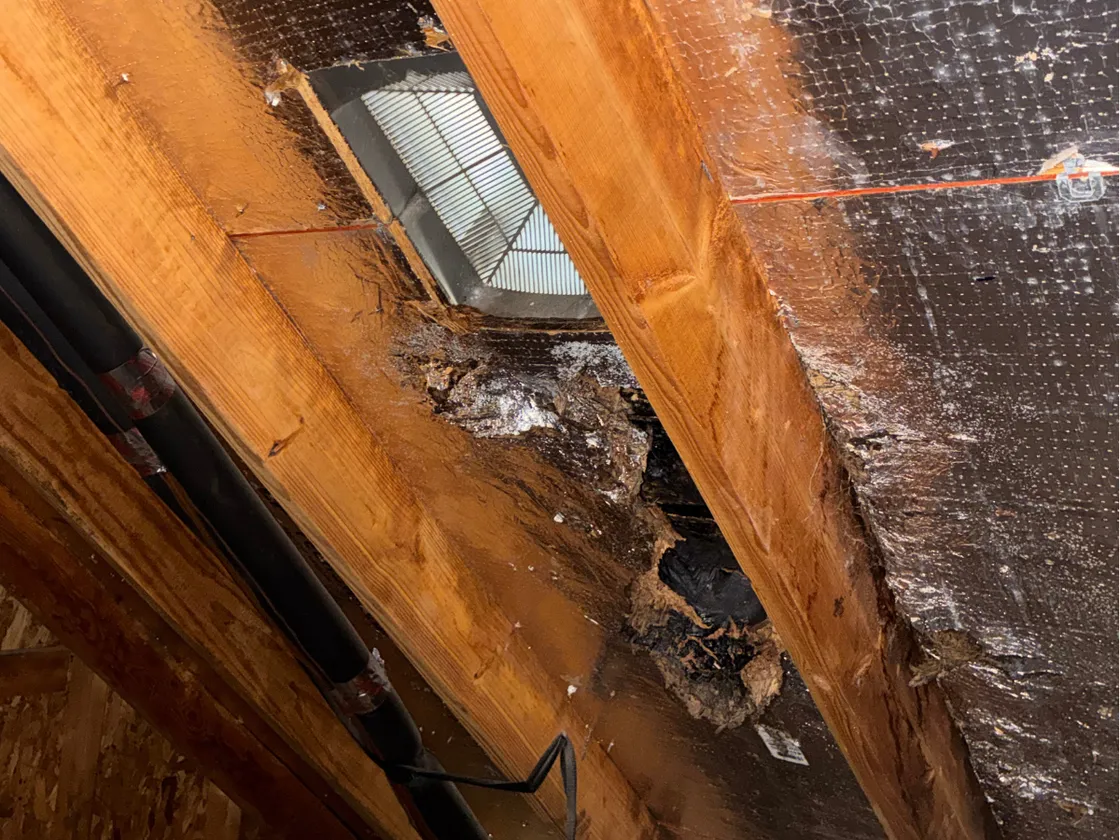
- Do not assume the leak is where the stain is. Water travels along rafters and decking. The entry point is often several feet uphill from the drip.
6. Get the roof looked at
Once the immediate danger passes, have someone find where the water got in and what else was hit. A storm often damages more than the one spot that leaks. Hail, lifted shingles, and flashing damage can all be present without showing inside yet.
Our storm damage roof repair team can look at the whole roof, and a storm damage inspection documents what we find with photos. We serve Katy and the surrounding Greater Houston area.
On insurance: you file with your own carrier. We document the damage and repair the roof.
Need help with a leak?
Call Rlynt Roofing at (832) 451-3210. We respond within one business day.
Frequently asked questions
Should I go on the roof to look for the leak?
No. A wet roof is slippery, and wind or storm damage can make it unstable. Look from the ground, from an upstairs window, or from the attic. A roofer can inspect it once it is safe, by drone if you would rather nobody goes up.
What do I do if water is near a light fixture or outlet?
Stay away from it. If you can reach the breaker box without standing in water, turn off the power to that room. If you cannot do that safely, call an electrician or your utility.
What photos should I take?
Wide shots of each affected room, close-ups of the wet area, and any visible damage outside. Take photos of damaged belongings before you move them. Keep the originals with their date and time.
Is a tarp enough to stop the leak?
A tarp slows water down, but tarps tear, shift in the wind, and break down in the sun. We cover the damaged area with durable synthetic underlayment instead and secure it properly, so it holds until the permanent repair is done. Either way it is temporary, not a repair. It also means working on a roof, which is a job for a crew with the right equipment.
Who do I call about insurance?
You file with your own insurance carrier. We document the roof damage and repair the roof. We do not file, negotiate, or settle claims.